Solitaire
Solitaire, also known as Klondike or Patience, deals seven piles face down and asks you to build all four suits from ace up to king.
64 games to play against AI or solve at your own pace.

Solitaire, also known as Klondike or Patience, deals seven piles face down and asks you to build all four suits from ace up to king.

Spider Solitaire clears ten columns by assembling a king-to-ace run in one suit, then lifting the whole run off the table.

FreeCell deals every card face up and gives you four open cells, so a hand is a puzzle you can reason out rather than a gamble.

TriPeaks Solitaire clears three overlapping peaks one rank at a time, chaining long runs up and down from a single waste pile.

Pyramid Solitaire dismantles a 28-card pyramid by removing pairs that add up to thirteen, while kings leave on their own.

Yukon Solitaire lets you move any face-up card together with everything stacked on top of it, and there is no stock to fall back on.

Play eight verified Sudoku variants from Classic to Anti-knight, with six logic-rated levels, Daily history, training and layered rule-aware hints.

2048 is a sliding-tile puzzle: every move slides the whole board, tiles with matching numbers merge and double, and the goal is a 2048 tile.

Minesweeper hides mines under a grid: each number counts the mines touching it, and you clear every safe cell by reading those numbers.

Command sixteen pieces in the world's best-known game of checkmate and strategy.
i
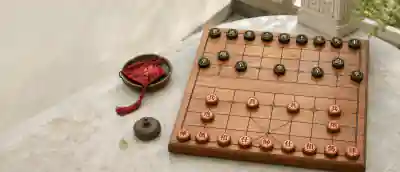
Xiangqi, also known as Chinese chess, is a fast tactical game fought across the river and within each side's palace.
i
Makruk, also known as Thai chess, is Thailand's traditional chess game, with distinctive pieces, pawn promotion, and endgame counting.
i
Build a connected insect colony without a board and surround the enemy queen bee.
i
Shogi, or Japanese chess, lets you capture pieces, drop them back into play, and attack the opposing king.
i
Use a changing hand of movement cards in a compact duel of perfect information.
i
Command double-sided troop tiles whose movement profiles change after every maneuver, and levy uncertain reinforcements to capture the opposing Duke.
i
Call your own trick target across five deals, then navigate compulsory overtakes and permanent spade trumps to finish with the highest individual score.
i
Bridge, formally Contract Bridge, combines a four-player partnership auction with declarer-and-dummy play, thirteen tricks, and One Deal, Four-deal Total Points, or Rubber scoring.
i
Name how many tricks your partnership will take before a card is played, then make the number exactly: spades are always trump, overtricks pile up as bags, and a Nil bid stakes a hundred points on taking none at all.
i
Avoid the points instead of chasing tricks: every heart costs one and the Queen of Spades thirteen, and the three hands you cannot see decide how much lands on you.
i
Choose trump in two Classic rounds or bid a Coinche contract, then coordinate with your partner through mandatory following, ruffing, overtrumping, Belote–Rebelote, and exact contract scoring.
i
Bid Petite, Garde, Garde Sans, or Garde Contre; manage the Dog and the three Ouds; then obey strict follow, trump, overtrump, Excuse, and Petit-au-bout rules in the mainstream four-player French game.
i
Five tricks with a 24-card deck, and the trump suit is bid each hand — which quietly changes what a card is, because the jack of trump’s colour partner joins the trump suit outright and stops being its own suit at all.
i
Bid a partnership contract, declare overlapping meld, then follow, trump, and head tricks in the mainstream double-deck game — or switch to the classic single-deck pass mode.
i
Build two sequences including one pure sequence, use the wild Joker carefully, and declare all thirteen cards before your opponent in fast two-player Points Rummy.
i
Draw and discard toward runs and sets, manage deadwood, then knock at the right moment — or press for gin — in the classic two-player rummy game.
i
Build same-rank melds with your partner, control the discard pile, complete a seven-card canasta, and reach 5,000 points across successive hands.
i
Discard for hand and crib value, peg through running counts to 31, then count fifteens, pairs and runs in the classic race to 121.
i
Play two private cards against five shared community cards, choosing when to check, call, raise or fold across four betting rounds.
i
Use the dice to race, hit, block, and bear off all fifteen checkers.
i
Race your marbles across a star board with long, turning chains of jumps.
i
Race to the far side while placing walls that reshape both players' shortest paths.
i
Move workers, build towers, and win by climbing to the third level.
i
Race colored towers forward while each landing square dictates the opponent's next tower.
i
Go, known as Weiqi in Chinese and Baduk in Korean, is an ancient board game of surrounding territory and capturing stones.
i
Othello, also known as Reversi, is played by trapping opposing discs between your own and flipping them to your color.
i
Draw one edge at a time, claim completed boxes, and control the chains that decide the score.
i
Fit all 21 polyominoes onto a shared board by touching your own pieces only at the corners.
i
Move like a chess queen, then fire an arrow that permanently divides the board.
i
Build and control stacks while keeping every surviving group connected to a red anchor.
i
Connect Four, also called Connect 4 or 4 in a Row, is won by dropping discs into columns and completing a line before your opponent.
i
Gomoku, also called Five in a Row, is won by building an unbroken line of five stones while stopping your opponent's threats.
i
Choose the piece your opponent must place and find a line sharing one attribute.
i
Move rings, flip markers, and remove rows of five in a deep game of shifting lines.
i
Place two stones per turn after the opening move and race to connect six.
i
Master mandatory captures in both English/American checkers and international draughts.
i
Form mills of three stones, remove enemy pieces, and reduce their mobility.
i
Capture by approaching or withdrawing, then continue through tactical relay sequences.
i
Use looping tracks to make sweeping captures on a compact Indonesian board.
i
Banqi, also called Chinese Dark Chess or Half Chess, reveals a hidden army piece by piece on half of a Xiangqi board.
i
Capture, strengthen, and preserve all three visible piece types in a tense two-action stacking duel.
i
Make a quiet move on one board, then mirror it with a forceful push on another.
i
Attack with matching ranks, defend with higher cards or trumps, and shed every card before the talon empties so you are not the last player left holding cards.
i
Dou Dizhu, or Fight the Landlord, is China's classic three-player climbing game: one landlord races two cooperating farmers through combinations, bombs, and the rocket.
i
Guan Dan, also written Guandan, is a four-player partnership climbing game in which level cards, heart wilds, bombs, tribute, and promotion carry across deals.
i
Deploy a hidden army, remember revealed ranks, and capture the opposing flag.
i
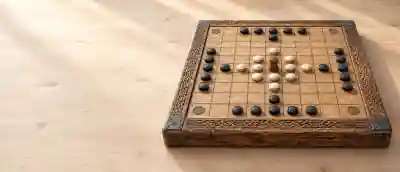
Hnefatafl, often described as Viking chess, is an asymmetric tafl game in which defenders escort the king to a corner under Copenhagen rules.
i
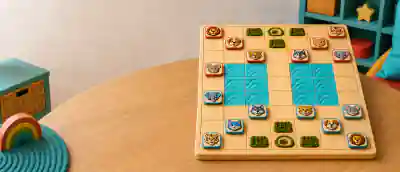
Dou Shou Qi, also called the Jungle Game, Jungle Chess, or Animal Chess, sends eight ranked animals through rivers, traps, and dens.
i
Junqi, also known as Army Chess, Military Chess, or Luzhanqi, uses hidden ranks, roads, and railways in a race to capture the flag.
iThe World at Play is more than a rules reference—face an AI or solve at your own pace; every title is ready to play.
Opponent games have adjustable AI; solo puzzles use layered, verifiable hints that let you choose how much help to reveal.
Discover Go and Shogi, chess and military games, African mancala, Amazons, and dozens of other traditions and modern designs.
Complete rules, a first-game walkthrough, practical strategy, and common mistakes help you finish your first game with confidence.
No download, account, or matchmaking wait. Start a game or change difficulty whenever you like; play stays local to your browser.