Capture-the-King Games: Chess, Xiangqi, Makruk, Shogi, Onitama and Hive
Two pieces may be left on the board, or thirty-two — while that one piece lives, the game is not over.
One core, fifteen centuries
What unites this family is not movement but the logic of winning: there is one irreplaceable piece, and the whole game orbits its safety. You can take every other piece your opponent owns and still not have won; you can be far behind on material and end it in one move.
The four chess variants trace to a single source, chaturanga in India around the 6th century. Travelling west through Persia and the Arab world it became European chess; travelling east and merging with local tradition it settled into Xiangqi in the late Song period; further east it became Shogi; travelling south it left Makruk in Southeast Asia. One core walked in four directions for more than a thousand years.
The divergence: where captured pieces go
The board divides them first. Chess and Makruk are played in the squares, Xiangqi and Shogi on the intersections. Xiangqi adds a river and a palace, cutting the board into regions certain pieces may never leave — advisors and elephants cannot cross the river, which has no counterpart in the other three.
But the sharpest divide is what happens to a captured piece. In chess, Xiangqi and Makruk it is gone. Shogi lets you drop a captured piece back as your own, a rule that settled around the 15th–16th centuries. Material never runs out, it only changes sides, which is why Shogi almost never draws by insufficient material and why its endgames are far more complex than the others.
Makruk preserves the most archaic features: pawns promote on the sixth rank, and only to a weak piece. It sits closest to chaturanga, and its endgames run to a completely different rhythm from modern chess.
Two modern games, the same core
Onitama (2014, Japan) compresses chess onto a 5×5 board: four students and a master per side, with movement printed not on the pieces but on five shared cards that pass to your opponent after use. Two ways to win — capture the enemy master, or walk your own master into their temple square.
Hive (2001, UK) goes further and removes the board entirely. The shape the interlocking pieces make is the board, and the hive may never break apart. You win by filling all six spaces around the enemy queen — and it does not matter whose pieces do the filling, including their own.
Placing Hive in this family drew an objection at review: mechanically it is nothing like chess. But look at the win condition and it is clear — a queen surrounded on all six sides is the same thing as Xiangqi's stalemate loss, where a general under no attack simply cannot move. Fifteen centuries later, the old core came back wearing a new face.
The 7 games in this family

Chess
Europe · Ancient
Command sixteen pieces in the world's best-known game of checkmate and strategy.
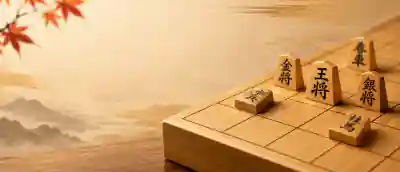
Shogi
East Asia · Ancient
Shogi, or Japanese chess, lets you capture pieces, drop them back into play, and attack the opposing king.
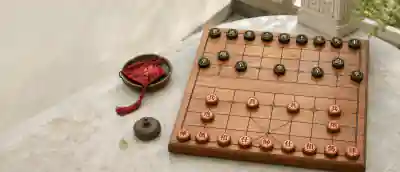
Xiangqi
East Asia · Ancient
Xiangqi, also known as Chinese chess, is a fast tactical game fought across the river and within each side's palace.
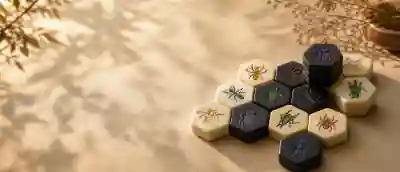
Hive
Europe · Contemporary
Build a connected insect colony without a board and surround the enemy queen bee.

Makruk
Southeast Asia · Ancient
Makruk, also known as Thai chess, is Thailand's traditional chess game, with distinctive pieces, pawn promotion, and endgame counting.
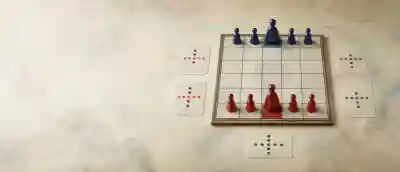
Onitama
East Asia · Contemporary
Use a changing hand of movement cards in a compact duel of perfect information.
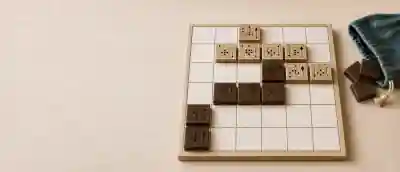
The Duke
The Americas · Contemporary
Command double-sided troop tiles whose movement profiles change after every maneuver, and levy uncertain reinforcements to capture the opposing Duke.