Breakthrough Games: Junqi, Stratego, Jungle Chess and Hnefatafl
No need to take everything, no need to checkmate anyone. Step on that square and it is over.
One structure, four costumes
These four share an identical win condition in structure: somewhere on the board is a particular square, and any piece entering it ends the game immediately. For Junqi it is the enemy headquarters, for Stratego the square holding the flag, for Jungle Chess the enemy den, for Hnefatafl the four corner forts.
That structure produces a tension found nowhere else: however far ahead you are in the middlegame, one gap in the line lets your weakest piece finish it in a single move. In Jungle Chess, a rat entering the den ends the game exactly as an elephant would.
Two historical threads meeting in the 20th century
Hnefatafl is by far the oldest here, a member of the Nordic tafl family, widely played across Scandinavia in the Viking age and carried by settlers to Iceland, Britain and Ireland. It faded as chess arrived, and the rules were essentially lost by the 18th century; the versions played today were reconstructed in the late 20th and early 21st centuries from excavated boards and fragmentary sources.
The other three are products of the 20th century and carry its marks. Stratego descends from L'Attaque, published in France in 1908 and designed by Hermance Edan — a woman, which was rare in the industry then — and was taken worldwide after the war by the Dutch publisher Jumbo. Junqi is a Chinese military-themed hidden-identity game from the same era. Jungle Chess (Dou Shou Qi) is a 20th-century folk children's game that replaces military ranks with animals.
What is striking is that all three arrived independently at the same design: hidden identity, rank-based capture, and victory by reaching the flag. Junqi and Stratego resemble each other closely enough that a shared origin is often assumed, but no firm evidence exists.
The asymmetric one
Hnefatafl is the only game on this site where the two sides have different goals and different piece counts: twelve defenders plus a king must escort him out to a corner, while twenty-four attackers must capture the king or surround him together with every surviving defender. Two to one on numbers — but the defence has the king as a live piece.
That asymmetry is notoriously hard to balance, and it is exactly where the modern reconstructions disagree most. This site uses the Copenhagen 11×11 rules; see “Sources and References” on that page.
The 4 games in this family
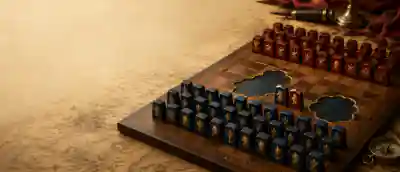
Stratego
Europe · Early modern
Deploy a hidden army, remember revealed ranks, and capture the opposing flag.
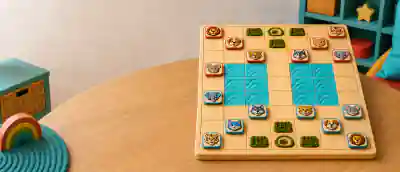
Jungle Chess
East Asia · Early modern
Jungle Chess, also called Dou Shou Qi, Animal Chess or the Jungle Game, sends eight ranked animals through rivers, traps, and dens: the rat beats the elephant, and lions and tigers leap the river.
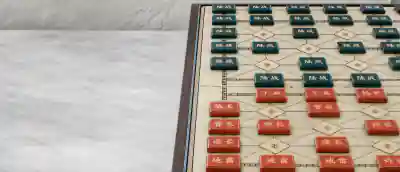
Junqi
East Asia · Early modern
Junqi, also known as Army Chess, Military Chess, or Luzhanqi, uses hidden ranks, roads, and railways in a race to capture the flag.
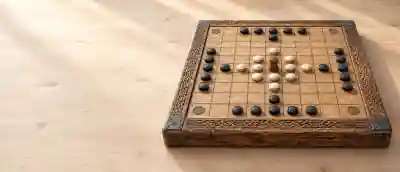
Copenhagen Hnefatafl
Europe · Ancient
Hnefatafl, often described as Viking chess, is an asymmetric tafl game in which defenders escort the king to a corner under Copenhagen rules.