Puzzles & Matching: Deduction, Planning and Clearing
This family includes Sudoku, 2048, Minesweeper, Block Puzzle, Number Match, Mahjong Solitaire and Bubble Shooter. The comparison below starts with Sudoku and 2048: a board that is already written and waiting to be read, or a board that is rewritten every time you move.
The shared spine: no opponent, but the position still degrades
Nobody here is competing with you. Progress is yours and so are the mistakes — there is no such thing as an opponent's blunder handing you a move. So both games put the pressure in the same place: the board keeps running out of room. Every digit you write removes candidates from the cells that remain; every move you make adds a tile you did not pick.
How it degrades is the dividing line. In Sudoku the damage is yours: a wrong digit always leaves a contradiction on the grid, and that contradiction can be pointed at. In 2048 half the damage is not yours: which empty cell the new tile lands in, and whether it is a 2 or a 4, is not your decision. All you control is whether it can land without killing the board.
That produces two different kinds of thinking. Sudoku is backward-looking: push the known facts as far as they go, because the answer is already there. 2048 is forward-looking: assume the least convenient tile, and keep a place for it that does not break the structure you have built.
Sudoku: complete information, so every step can be explained
On a 9×9 grid, row, column and box constraints cross in every cell. Every puzzle released here is verified to have exactly one solution, so no step ever needs a guess: either the digit is forced by what is already written, or you have not yet found the unit that forces it. This is also the only game in the family where "you got that wrong" is a decidable statement.
Difficulty is not the clue count. It is the strongest technique needed to finish without guessing — naked singles, hidden singles, locked candidates, pairs, X-Wing, and on into colouring and chains. That definition cannot flatter a puzzle: few clues does not mean hard, and what actually decides how a grid feels is whether you recognise the shape you are stuck on.
When you do get stuck, a hint opens in four layers: a direction, then the name of the technique, then the evidence, and only then an optional fill. It teaches the thing you will spot yourself next time rather than finishing the cell for you.
2048: the next tile is random, so leave it somewhere to land
Every move slides the whole board one direction until each tile hits a wall or another tile, and two equal tiles that meet merge into one of double the value. A tile created by a merge cannot merge again in the same move, so a row of three 2s becomes a 4 and a 2, never an 8. Each merge frees a cell, and one new tile — a 2 nine times out of ten, otherwise a 4 — immediately appears in a random empty one. The run ends when the board is full and no two neighbouring tiles match.
The real skill is therefore not building a big number, it is keeping the shape: park the largest tile in one corner, order the row beside it downward, and try to use only two directions. The moment you pull the big tile out of the corner for one convenient merge, the next few moves force a third and fourth direction, and the random tile finally gets to land somewhere that hurts.
There is no unique solution here and no single move you can call wrong; the only measures are the score and the highest tile. That is why the daily run pins the random stream to the date: make the same moves as somebody else and you get the same luck, which is the first time two 2048 scores can be compared at all. Undo is switched off in that mode for the same reason.
Which one to open
For something you can finish, take Sudoku. It has an end, a single answer, and a summary of which techniques you actually used. Twenty minutes a grid, and being stuck never comes down to luck.
For something you play until it ends, take 2048. There is no finish line, only how far this run goes. The rules fit in one sentence, a run takes a few minutes, and the longer it lasts the more it asks whether you really did hold that corner.
The 16 games in this family
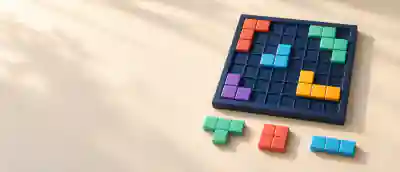
Block Puzzle
East Asia · Contemporary · Casual Game
Block Puzzle deals three pieces at a time to drop anywhere they fit; full rows and columns clear, and the run ends when nothing fits. It is the game Block Blast made famous, with the piece stream and the scoring published.
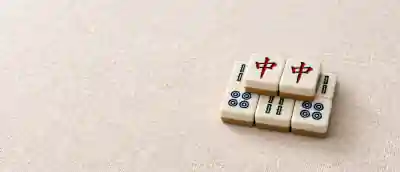
Mahjong Solitaire
East Asia · Contemporary · Casual Game
Mahjong solitaire is the tile-matching puzzle: take pairs of identical tiles from the stack, but only the ones nothing rests on with a clear side.
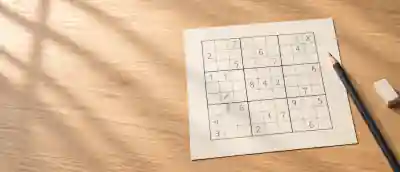
Sudoku
East Asia · Contemporary · Casual Game
Play eight verified Sudoku variants from Classic to Anti-knight, with six logic-rated levels, Daily history, training and layered rule-aware hints.
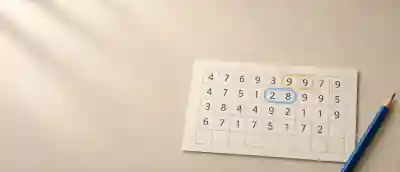
Number Match
Europe · Contemporary · Casual Game
Number Match is the pen-and-paper game Take Ten, also known as Numberama or Seeds: cross out two equal digits, or a straight line of digits adding up to 10, along a row, a column or a diagonal — the first digits of neighbouring rows link up too, and so do the last. Copy what is left when you run dry, and clear sheet after sheet until the adds run out. Every daily is one sheet, the same for everyone and checked to be clearable.
Minesweeper
The Americas · Contemporary · Casual Game
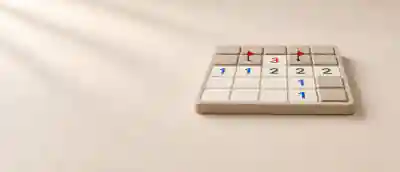
Minesweeper hides mines under a grid: each number counts the mines touching it, and you clear every safe cell by reading those numbers.
Bubble Shooter
East Asia · Contemporary · Casual Game
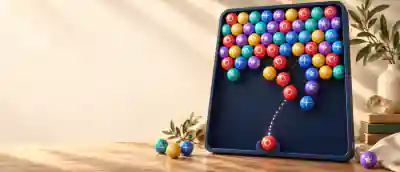
Aim, match three, and let the whole cluster fall. Play untimed Endless and 100 levels, with accurate bank-shot guides, free swaps and hints.

Block Drop
Europe · Contemporary · Casual Game
Block Drop is a Tetris like falling block game: move and rotate seven shapes to fill complete rows. Play solo Classic, send garbage lines in Battle, race to clear 40 lines or work together in Co-op. Two players can share one PC keyboard; on desktop or phone, six AI levels can be your opponent or teammate.
Marble Flow
The Americas · Contemporary · Casual Game
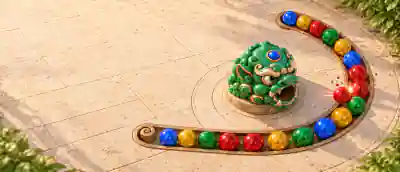
Clear the middle and pull matching ends together. Marble Flow is a marble shooter with 65 sequential levels, rolling chains, special shots, bridges and dual tracks. Swap the small crown marble for free and continue your saved run.

Fish Eat Fish
The Americas · Contemporary · Casual Game
Fish Eat Fish is the sea game with one rule: eat fish smaller than you and keep away from bigger ones. Fill the evolution ring to grow into the next fish, through 34 levels in six seas: from clownfish to reef shark in Coral Shallows, to a sea lion in the Kelp Forest, a humpback in the Open Ocean, a killer whale Under the Ice, a saltwater crocodile in the Mangrove Estuary and a giant squid in the Abyss. Three stars a level, a 123-entry codex with a real fact in each and rare colours to collect, and a Daily Sea that is the same for everyone.
2048
Europe · Contemporary · Casual Game
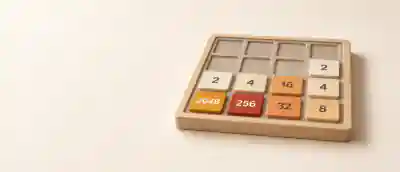
2048 is a sliding-tile puzzle: every move slides the whole board, tiles with matching numbers merge and double, and the goal is a 2048 tile.
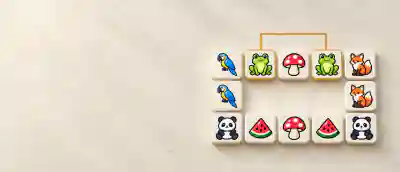
Mahjong Connect
East Asia · Contemporary · Casual Game
Mahjong Connect, also called Onet or Shisen-Sho, clears the board in pairs: two matching tiles go when a line with at most two turns joins them through empty space, around the edge if need be.
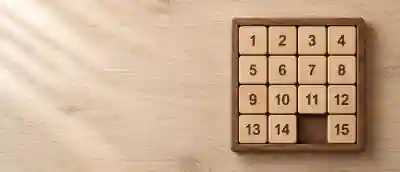
15 Puzzle
The Americas · Early modern · Casual Game
The 15 Puzzle is the sliding puzzle of numbered tiles: slide them one at a time, or a whole row at once, until they run in order with the gap in the bottom-right corner. Play the classic 4×4 or anything from 3×3 to 6×6, with a clock that starts on your first move, a daily board that is the same for everyone, and hints that follow a shortest solution on 3×3 and 4×4.
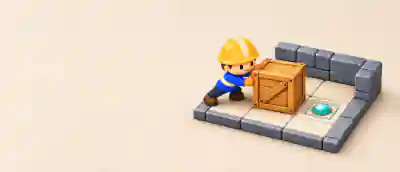
Sokoban
East Asia · Contemporary · Casual Game
Sokoban is the warehouse puzzle: push every crate onto a goal, one at a time, never pulling. 445 levels in seven worlds — Microban from level 1 in its author's order, then Microcosmos, Nabokosmos, Picokosmos, GRIGoRusha and Sasquatch — after a six-level tutorial. Tap a crate and the squares it can reach light up; every level shows its proven fewest pushes, a crate that can no longer reach a goal turns red, and a hint shows the next push without making it.

Nugget Claw
The Americas · Contemporary · Casual Game
Nugget Claw is a classic gold miner game: time the swinging launcher, fire the claw and haul up gold, diamonds and mystery bags. Heavy loads come up slowly, so every catch trades money against time. Play alone or 2 player on one screen, each with a launcher of their own. 30 levels in five mines with a shop between them, three layouts a level, goals that tighten as you go as in the original, and a failed level never sends you back to level 1. Held upright on a phone, the whole mine turns 90° and the claw fires sideways.

Cut the Rope
Europe · Contemporary · Casual Game
Cut the Rope is a physics puzzle game: swipe to cut the ropes and swing the candy into the mouth of Mochi the cat, collecting stars on the way. 425 levels in 17 boxes.
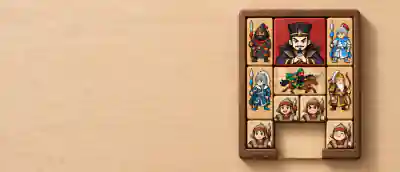
Klotski
East Asia · Early modern · Casual Game
Klotski is the sliding-block puzzle known in China as Huarong Road (华容道): slide the generals and soldiers aside until Cao Cao, the big 2×2 block, reaches the exit at the bottom of the tray. One piece sliding any distance, even around a corner, is one move — the classic Heng Dao Li Ma layout takes 81. 64 levels from 3 moves to the hardest possible 138, 28 traditional named layouts, a daily puzzle, and a hint that shows the next move without making it.