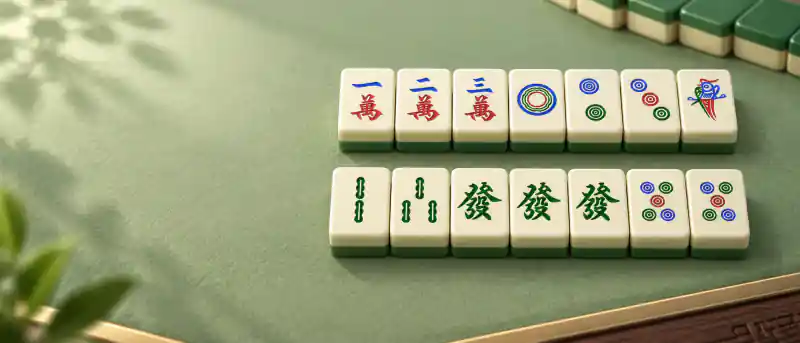
Sichuan mahjong is the four-player game from south-west China that uses only the 108 number tiles, allows no chows, and keeps going after someone wins. Before the first discard each player passes three tiles to another player and then names one suit to get rid of, called the missing suit. A winning hand may hold only the other two suits. In the blood battle version a player who wins drops out and the other three play on, and in blood flow a winner stays at the table and can win again. The general mahjong ideas this page takes for granted, such as sets, pairs, pung and kong, are explained on the mahjong rules page. There is no single official Sichuan rule book, so everything below is described the way this site plays it, and the places where other rule sets differ are collected in one table further down.
What the Sichuan mahjong terms mean
Most English descriptions of the game are translations of Chinese table slang, and different sites translate them differently. These are the names used on this page.
| Chinese | Pinyin | On this page | What it means |
|---|---|---|---|
| 四川麻将 / 川麻 | Sìchuān májiàng | Sichuan mahjong | The game itself. It is also called Chengdu mahjong after the provincial capital, and the Mahjong International League calls it Bloody Mahjong. |
| 血战到底 | xuèzhàn dàodǐ | Blood battle | Literally "fight to the bloody end". Winners leave and the hand goes on until three have won. |
| 血流成河 | xuèliú chénghé | Blood flow | Literally "blood flowing into a river". Winners stay in and can win again until the wall is empty. |
| 换三张 | huàn sān zhāng | Exchange three | Passing three tiles of one suit before play starts. |
| 定缺 | dìng quē | Missing suit | The suit you commit to clearing. The MIL rules call it the voided suit. |
| 花猪 | huā zhū | Flower pig | A player still holding the missing suit when the wall runs out. It has nothing to do with flower tiles, which this game does not use. |
| 查叫 | chá jiào | Ready check | Checking at a drawn hand who is one tile from winning. |
| 刮风下雨 | guāfēng xiàyǔ | Wind and rain | Kong payments. An exposed kong is "wind", a concealed kong is "rain". |
| 根 | gēn | Root | Four identical tiles in one hand, worth one extra fan. |
How to play Sichuan mahjong, step by step
A hand of Sichuan mahjong runs through seven stages, and the second and third are what set it apart from other styles.
- Deal. Everyone gets 13 tiles and the dealer takes a 14th. That leaves 55 tiles in the wall.
- Exchange three. Each player picks three tiles of one suit and passes them in the direction set for this hand.
- Choose a missing suit. Each player names Characters, Dots or Bamboo. All four choose at the same time and the choices are then shown to everyone.
- Draw and discard. The dealer discards first, then play passes in turn. While you hold any tile of your missing suit, you must discard those first. You may pung, kong or win on another player's discard, but never chow.
- Someone wins. The winner is paid at once. In blood battle they leave the hand, and in blood flow they stay and keep drawing.
- The hand ends. Blood battle stops when a third player wins or the wall runs out. Blood flow always plays until the wall runs out.
- Drawn-hand checks. When the wall is exhausted, anyone who never won faces the flower pig check, the ready check and kong refunds.
Kongs can happen at any point during stage 4 and are paid on the spot. On this site a match is eight hands, everyone starts with 100 points, balances can go below zero, and the final ranking is by total score.
The tiles: 108 number tiles, no honors and no chow
The set is three suits, Characters, Dots and Bamboo, each numbered 1 to 9 with four copies of every tile. There are no winds, dragons, flowers or seasons, so hands that depend on honor tiles, such as thirteen orphans, cannot exist.
No chow means you cannot take the previous player's discard to expose a run. Runs still count in your hand, and a discard can be the tile that finishes a run when it is also your winning tile.
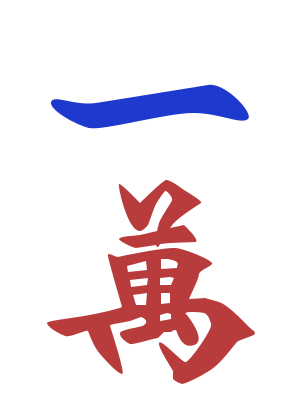

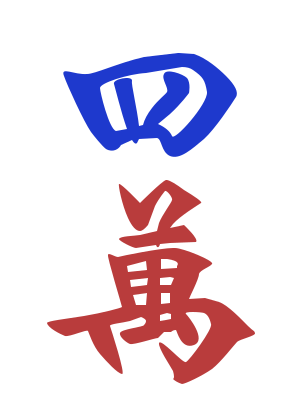
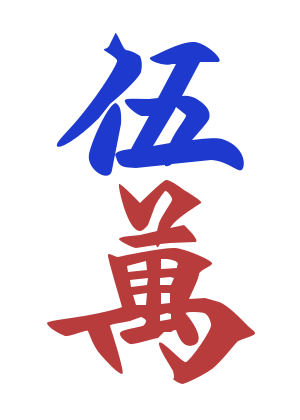
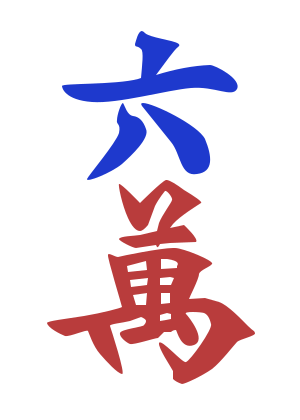
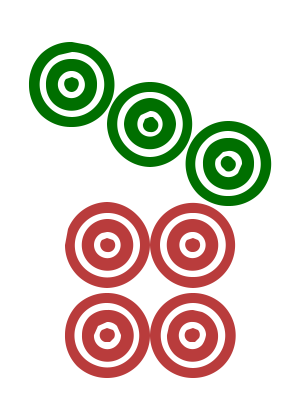


 Missing suit Bamboo, waiting on 2 Characters
How the exchange of three tiles works
Every player hands over three tiles of a single suit and receives three in return. The ranks do not need to connect, so 1, 5 and 9 of Characters can travel together, but two Characters and a Dot cannot. The dealer passes three as well, even while holding 14.
The direction is drawn at random for every hand, with each option coming up about a third of the time, and the middle of the table shows which one applies.
| Direction | Your three tiles go to | You receive from |
|---|---|---|
| Pass right | The next player in turn order | The player before you |
| Pass across | The player opposite | The player opposite |
| Pass left | The player before you | The next player in turn order |
All four players pass at once, so you commit your tiles before seeing what is coming. The missing suit is chosen straight after.
The missing suit: which suit you have to void
After the exchange, each player names one suit to clear from this hand. You cannot win until every tile of that suit has left your hand, and none of your exposed pungs or kongs may contain it. The suit you void has to be the one you named. If you named Bamboo and happen to hold no Characters, that does not count, and you still have to clear the Bamboo.
The choice is fixed for the hand and brings three restrictions with it:
- While you hold any tile of the missing suit, you may only discard from that suit, including tiles of it you draw later.
- While it is not cleared, you cannot pung or kong another player's discard. Your only option is to pass.
- While it is not cleared, you cannot win, even if a missing-suit tile would complete a run.

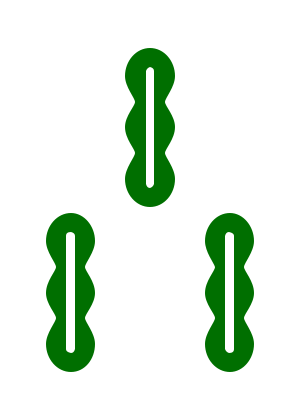
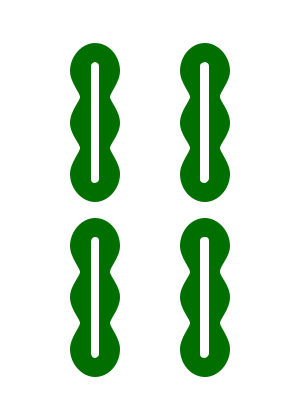 Missing suit Bamboo
Each player's missing suit is shown beside their seat for the rest of the hand, which matters for defence, as the strategy section explains.
What counts as a winning hand
A Sichuan hand wins with four sets plus a pair, or with seven pairs, as long as the missing suit is gone. There is no minimum score, so a plain hand with no bonus patterns at all is a legal win.
- Seven pairs must be fully concealed. Four identical tiles may be used as two of the pairs and also score a root.
- You can win by drawing the tile yourself (self-draw) or on someone's discard.
- Several players may win on the same discard. Each of them is paid by the player who discarded it.
- This site has no "missed win" lock. If you decline a winning discard, you can still win on the same tile from another player before your next draw.
 Seven pairs waiting on 8 Dots, with four 5 Dots used as two pairs
Blood battle vs blood flow
The two versions share the deal, the exchange, the missing suit, the winning shapes and the fan list. They differ only in what happens to a player after a win.
| Blood battle | Blood flow | |
|---|---|---|
| After you win | You leave the hand | You stay, with your hand locked |
| The hand ends when | A third player wins, or the wall runs out | The wall runs out |
| Wins per player per hand | One | Unlimited |
| Do you pay after winning? | No, later self-draws and kongs skip you | Yes, you pay for other players' self-draws and concealed or added kongs |
| Drawn-hand checks apply to | Players still in the hand | Players who never won |
| On this site | Rules → Blood battle | Rules → Blood flow |
The lock in blood flow works like this. After your first win the 13 tiles in your hand are fixed. Each time you draw, you either win or discard the tile you just drew. You cannot pung or add to a pung, and a concealed kong is allowed only if it leaves your winning tiles unchanged. Whatever you were waiting on at your first win, you keep waiting on, and each time one of those tiles appears you can win again.
In blood battle, the hand ends the moment a third player wins. The last player left is never checked for a flower pig or a ready hand.
Sichuan mahjong scoring: fan, roots and the 4-fan cap
This site counts nine fan patterns. The table below is generated from the same data as the in-game rule card.
Basic hand0 fan
Four sets and a pair; no bonus pattern is required.
All triplets1 fan
Four triplets/kongs and a pair.

Seven pairs2 fan
Seven pairs; four identical tiles may count as two pairs.
Full flush2 fan
Every tile uses just one suit.
Four declared sets1 fan
Four declared sets; finish the remaining pair.
Four-of-a-kind bonus1 fan
Each set of four identical tiles adds one fan.
Replacement-tile win1 fan
Win by self-draw on the replacement tile after a kong.
Robbing a kong1 fan
Win on a tile an opponent adds to a pung to make a kong.
Last-tile win1 fan
Winning with the live wall empty adds one fan here.
Fan are doublings, not points. Add up every pattern the winning hand meets, and the base value is 2 raised to that total:
| Fan | 0 | 1 | 2 | 3 | 4 or more |
|---|---|---|---|---|---|
| Base value | 1 | 2 | 4 | 8 | 16 |
The cap is 4 fan, so any total above 4 still pays 16. The "×8" or "×16" on the win summary is this base value.
Patterns stack, which is where most scoring mistakes happen:
| Hand | Patterns counted | Fan | Base value |
|---|---|---|---|
| Plain win | none | 0 | 1 |
| All pungs | all triplets | 1 | 2 |
| Seven pairs with four of a kind | seven pairs + root | 3 | 8 |
| One-suit all pungs | full flush + all triplets | 3 | 8 |
| One-suit seven pairs | full flush + seven pairs | 4 | 16 |
| One-suit seven pairs with a root | full flush + seven pairs + root = 5 | capped at 4 | 16 |
| Four exposed pungs, waiting on a pair | four declared sets + all triplets | 2 | 4 |
How roots are counted
Every set of four identical tiles in the hand is a root worth 1 fan, and each different tile counts separately. The four do not have to be declared as a kong. A pung of 5 Dots plus a fourth 5 Dots used in a 4-5-6 run is a root. It follows that every kong is a root, so a win on the replacement tile after a kong is worth at least 2 fan, 1 for the kong win and 1 for the root.
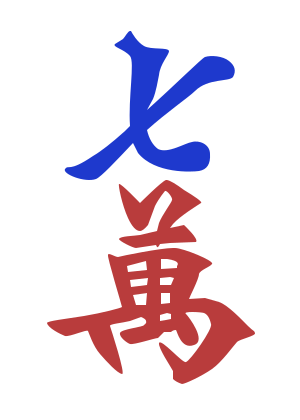
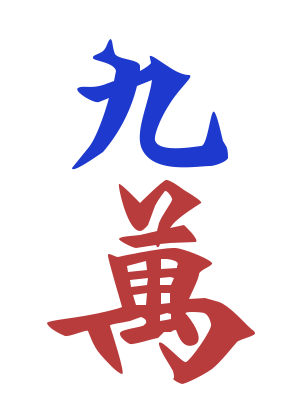
Self-drawn 9 Characters on the replacement tile after a kong of 7sThree patterns depend on how the win happens. The last-tile bonus applies to any win after the final wall tile has been drawn, whether by self-draw or on a discard. Robbing a kong means winning on the tile a player adds to their exposed pung, and the kong then never happens. A self-draw adds no fan of its own. It adds a point to each payment instead, as the next section shows.
Who pays on a win: discard wins and self-draws
On a discard win, only the player who discarded the tile pays, and they pay the base value. On a self-draw, every player still liable pays the base value plus 1.
Who is liable depends on the version. In blood battle, anyone who has gone out is finished paying for this hand, so if one player is out and you self-draw a plain hand, the remaining two pay 2 each. In blood flow all three others pay, including anyone who has already won.
| With all four players in | Fan | Payment | Winner collects |
|---|---|---|---|
| Plain win on a discard | 0 | Discarder pays 1 | 1 |
| Plain self-draw | 0 | Each opponent pays 2 | 6 |
| One-suit seven pairs on a discard | 4 | Discarder pays 16 | 16 |
| One-suit seven pairs, self-drawn | 4 | Each opponent pays 17 | 51 |
| Replacement-tile win after an exposed kong | 2 | Each opponent pays 5 | 15, after 2 already taken from the player who fed the kong |
When a kong is robbed, the player who tried to add the tile pays alone, exactly as if they had discarded it. A replacement-tile win always counts as a self-draw on this site, even when the kong was made from another player's discard, so all three opponents pay.
Kong payments: wind and rain
Kongs pay immediately when they are declared, without waiting for anyone to win. Exposed kongs are called wind and concealed kongs rain.
| Kong | How it is made | Who pays | Each pays |
|---|---|---|---|
| Exposed kong | Three in hand plus another player's discard | The discarder | 2 |
| Concealed kong | All four drawn yourself | Every other liable player | 2 |
| Added kong | A fourth tile added to your exposed pung | Every other liable player | 1 |
"Liable" means players still in the hand in blood battle, and all three others in blood flow. After any kong you draw a replacement tile from the back of the wall.
How this site rules the details:
- Other players may rob an added kong. If they do, the kong is cancelled and no kong payment is made.
- You may add the fourth tile to a pung on any later turn, not just the turn you drew it, and it still collects 1 from each player.
- There is no kong transfer. If your discard right after a kong lets someone win, you keep the kong payment and the winner gets no extra fan for it.
- You cannot declare any kong while you still hold your missing suit.
- Kong income can be taken back. A player who never wins and is not ready when the wall runs out has to refund it, as below.
When the wall runs out: flower pigs, ready checks and refunds
When the last tile is drawn without the hand finishing, every player who has not won this hand goes through three checks. Players who already won are not checked, but they can collect.
- Flower pig. Anyone still holding a tile of their missing suit is a flower pig and pays 16 to every player who is not a pig, previous winners included. With three non-pigs at the table, that is 48 points from one pig.
- Ready check. Among the players who are not pigs, anyone one tile away from a legal win is ready. Each player who is not ready pays each ready player the highest base value that player could win with. It is valued as a discard win, so there is no self-draw point and no last-tile fan, and it tops out at 16. Pigs do not pay this a second time. This site judges readiness by shape alone, so you still count as ready when every copy of your winning tile has already been played.
- Kong refunds. Anyone who is not ready, pigs included, returns every kong payment they received this hand to the players who paid it.
A drawn hand is therefore far from a wash. Ready players collect, unready players pay, and a flower pig pays the most.
A blood battle hand scored from start to finish
Players A, B, C and D sit in turn order, each starting with 100 points, playing blood battle.
- B draws the fourth 9 of Dots and declares a concealed kong. A, C and D pay 2 each.
- C self-draws the 5 of Characters for a full flush, 2 fan, base value 4. A, B and D each pay 4 + 1 = 5, and C leaves the hand.
- Nobody else wins before the wall runs out. A named Bamboo as the missing suit but still holds the 5, 7 and 8 of Bamboo, so A is a flower pig. B is not ready. D holds seven pairs waiting on the 4 of Bamboo.
- A pays 16 each to B, C and D. B, not ready, pays D 4 for D's seven pairs and refunds the 6 from the kong, 2 each to A, C and D.
C: full flush, self-drawn 5 of Characters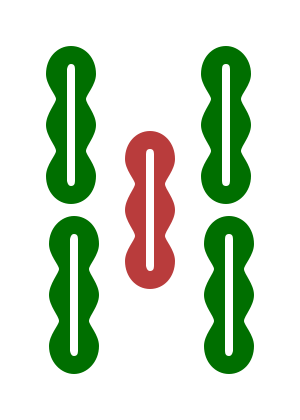
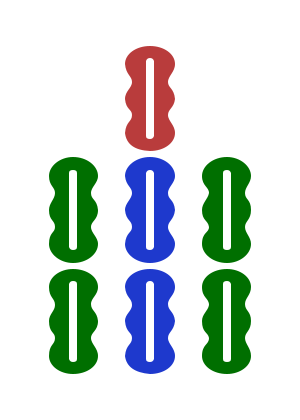
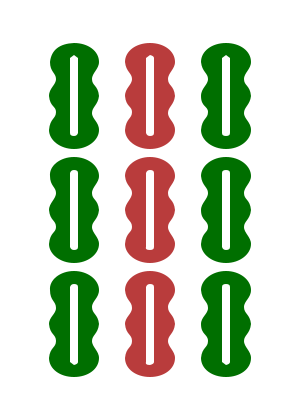
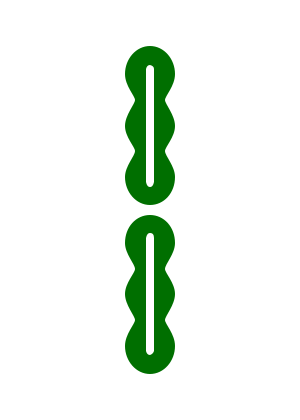 D at the draw: seven pairs waiting on the 4 of Bamboo
| Event | A | B | C | D |
|---|---|---|---|---|
| B's concealed kong | −2 | +6 | −2 | −2 |
| C's self-drawn full flush | −5 | −5 | +15 | −5 |
| Flower pig | −48 | +16 | +16 | +16 |
| B refunds the kong | +2 | −6 | +2 | +2 |
| Ready check | −4 | +4 | ||
| Total for the hand | −53 | +7 | +31 | +15 |
B ends the hand 7 points up despite never getting ready and losing the kong money, purely because A was caught as a flower pig. The four totals add up to zero.
Common Sichuan mahjong mistakes
| What people assume | How it actually works here |
|---|---|
| Any missing suit will do | It must be the suit you named, and you cannot win until it is gone |
| No chow means you can't win on a discard that completes a run | You can, you just can't expose a run from a discard |
| 4 fan means 4 points | Fan are doublings, so 4 fan is a base value of 16 |
| Seven pairs can't include four of a kind | It can, as two pairs, and it scores a root on top |
| Four exposed sets waiting on a pair is worth 1 fan | It also counts as all triplets, so at least 2 fan |
| Self-draw makes everyone pay double | Each opponent pays the base value plus 1 |
| Once you win, you never pay again | True in blood battle only. In blood flow you pay for other players' self-draws and concealed or added kongs |
| A flower pig only pays the players who never won | Previous winners collect too, up to 48 points from one pig |
| A drawn hand scores nothing | Flower pigs, unready hands and kong refunds all pay out |
| A win off a kong made from a discard is charged to that discarder | It is a self-draw here, paid by all three opponents |
| Passing on a win locks you out until your next turn | Not on this site |
| In blood flow you can rebuild your hand after the first win | The hand is locked and you discard whatever you draw |
How other Sichuan rule sets differ
Rule sets vary from city to city and app to app. The Mahjong International League (MIL) publishes a three-page English summary of competition Bloody Mahjong, and Chinese apps such as Tencent's Happy Mahjong have their own settings. The table lists the differences you are most likely to meet, with MIL clause numbers in brackets.
| Rule | Elsewhere | This site |
|---|---|---|
| Fan cap | MIL caps at 3 fan, 8 points (9.3) | 4 fan, base value 16 |
| How fan are counted | Happy Mahjong counts a plain win as 1 fan and doubles from there, as described by the Chinese site Game Daily | A plain win is 0 fan, so the same hand reads one fan lower here |
| Self-draw | MIL has each opponent pay base plus 1 (9.5) | Same |
| Win on a kong replacement | MIL counts it as a self-draw (fan table, item 6) | Same, even when the kong came from a discard |
| Discarding a winning tile right after a kong | MIL makes the kong declarer return all of that kong's income and gives the winner 1 extra fan (8.4, fan table item 7) | Kong income stays, no extra fan |
| Added kong payment | MIL pays it only when the fourth tile is added straight after drawing it (8.2) | Pays 1 from each player whenever it is added |
| Passing a win | MIL bars winning on a discard until your next draw, unless the new win scores differently (3.4) | No restriction |
| Flower pig | MIL fines the pig 48 points that nobody collects (11.2); Happy Mahjong pays each non-pig 16 times the base, per Game Daily | 16 to each non-pig |
| Exchange three | Not part of the MIL rules; Tencent's mahjong games randomise the passing order, per Game Daily | Random each hand: right, across or left |
| Choosing the missing suit | MIL has each player set aside one tile of the suit face down and discard it on the first turn (5) | Chosen after the exchange and shown for all four at once |
| Next dealer | MIL makes the first winner deal next, or the discarder after a multiple win, and repeats the dealer after a draw (6) | The deal moves to the next player every hand |
Is there a Sichuan mahjong rules PDF?
Yes, the MIL summary is a free three-page PDF, linked in the sources below, and it is the closest thing to an official English rule book. In 2024 a Chengdu mahjong association also issued a Chinese competition standard for Sichuan mahjong (T/TFMJ 01—2024), but its text could not be opened while this page was written, so it is not used here. The cheat sheet near the end of this page has a print button and fits on one sheet.
Your first game: choosing the three tiles and the missing suit
Start by counting how many tiles you hold in each suit and how well they connect. The usual plan is to pass your shortest, most scattered suit as a block of three.

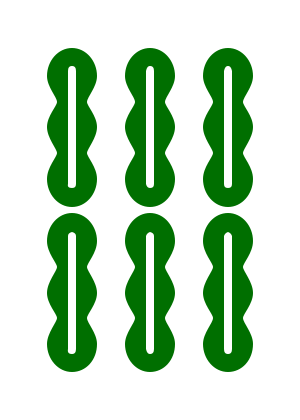 Before the exchange: seven Characters, three Dots, three Bamboo
Once the three Dots are gone, you hold no Dots at all. If the tiles you receive are not Dots, name Dots as the missing suit and you have nothing to clear. If all three that arrive happen to be Dots, compare Dots and Bamboo again and drop whichever is shorter and looser. Deciding after the exchange, not before, is what keeps this flexible.
For a first game, two goals are enough. Clear the missing suit, then get ready. Extra fan only matter once you are one tile from winning.
To play, open Mahjong, pick Blood battle or Blood flow under Rules, and confirm the new match. The Tutorial walks through a hand, Hint suggests a move, and Hand Coach explains what each option leads to, including at the exchange and the missing-suit choice.
Sichuan mahjong strategy
Get rid of the missing suit early. While it sits in your hand you can only watch other players' discards go by, and if the wall runs out first you pay 16 to each of the other three.
Discards in another player's missing suit are completely safe against that player. They cannot pung, kong or win on a tile of the suit they named, because their winning hand may not contain it. When two or three players are left, read the missing-suit marker beside each seat before choosing a discard.
Stop chasing fan at the cap. A one-suit seven pairs is already 16, and waiting for a root or a kong on top adds nothing but turns.
In blood battle, a quick small win can be the safer play. Once you win you are out, and nothing that happens later costs you anything. A plain win on a discard collects only 1, but staying in risks paying 9 for an opponent's self-drawn seven pairs with a root, or 17 for a one-suit seven pairs, especially when an opponent has already exposed two pungs in one suit.
In blood flow, make your first win on a wide wait. The lock means you keep that wait for the rest of the hand, and you go on paying for other players' self-draws and kongs. Waiting on 3 or 6 from a 4-5 gives up to 8 live tiles, while waiting on a single tile for a pair gives at most 3, so a turn or two spent widening the wait before the first win usually pays back.
Try to be ready before the wall runs out. At the ready check, ready players collect while unready players pay and also hand back their kong income.
Sichuan mahjong cheat sheet
| Topic | Rule on this site |
|---|---|
| Tiles and players | 108 number tiles, no honors or flowers; four players, dealer 14 tiles, others 13 |
| Before play | Exchange three tiles of one suit (right, across or left, random each hand), then name a missing suit |
| On your turn | Discard the missing suit first; no chow; no pung, kong or win until it is cleared |
| Winning hand | 4 sets + 1 pair, or seven pairs with nothing exposed; no missing-suit tiles anywhere; 0 fan is enough |
| Blood battle | Winners leave; ends at the third win or an empty wall |
| Blood flow | Winners stay with a locked hand; ends when the wall is empty |
| Fan | All triplets 1, seven pairs 2, full flush 2, four declared sets 1, each root 1, replacement-tile win 1, robbing a kong 1, last tile 1 |
| Base value | 0 to 4 fan pays 1, 2, 4, 8, 16; capped at 4 fan |
| Win payments | Discard win: discarder pays base. Self-draw: each liable player pays base + 1 |
| Kongs | Exposed: discarder pays 2. Concealed: each pays 2. Added: each pays 1 |
| Drawn hand | Flower pig pays each non-pig 16; unready pays each ready player their top base value; unready refunds kong income |
| Match | 8 hands, 100 points each to start |
Sources for the Sichuan rules above
- Mahjong International League, Brief Introduction to Bloody Mahjong (Sichuan Bloody Rules), the three-page summary whose clause numbers appear in the comparison table.
- Game Daily on the Xiaomi game centre, Happy Mahjong blood battle: flower pigs, ready checks and fan, 19 October 2021, in Chinese.
- Game Daily, How exchange three works in Tencent mahjong games, 8 November 2021, in Chinese.